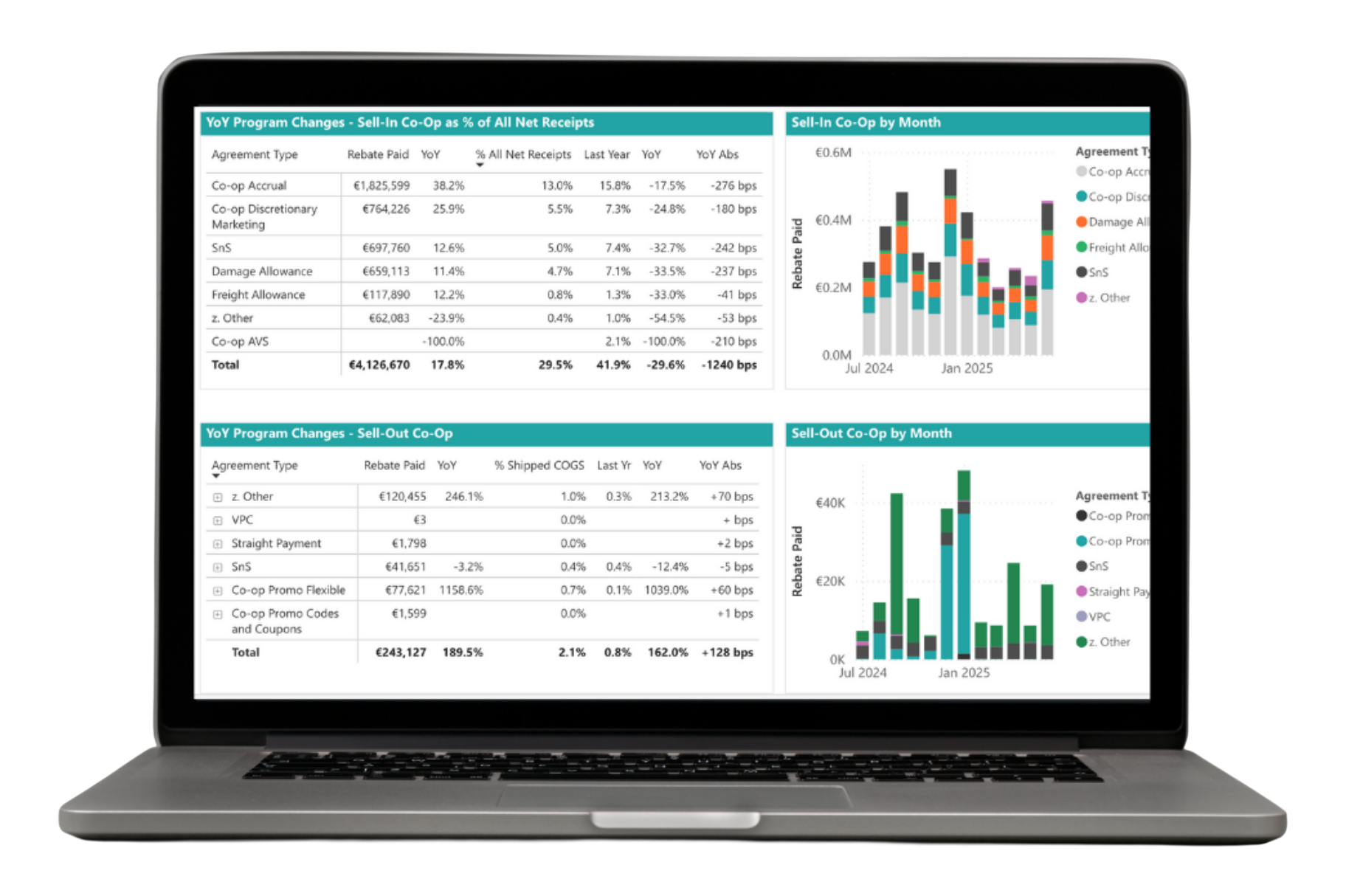
Weekly Business Reviews.
Our favorite mechanism for finding and amplifying leverage in your Amazon business.
Updated February 2, 2026
The Amazon Weekly Business Review (WBR) is the operating cadence Amazon uses to manage performance through data. For sales and finance leaders managing Amazon revenue, the WBR provides a structured, repeatable way to link financial results to operational drivers and customer outcomes. Unlike traditional reporting, the WBR is designed to create accountability, surface trends early, and drive clear weekly decisions.
BASIS brings the Amazon WBR process to sales and finance teams that want the same level of rigor Amazon applies internally. BASIS automates WBR data collection, standardizes visualization, and delivers a repeatable weekly workflow without manual reporting effort. The result is a scalable Amazon WBR analytics solution that helps regional and global teams spend less time building reports and more time understanding performance and hitting revenue and margin targets.
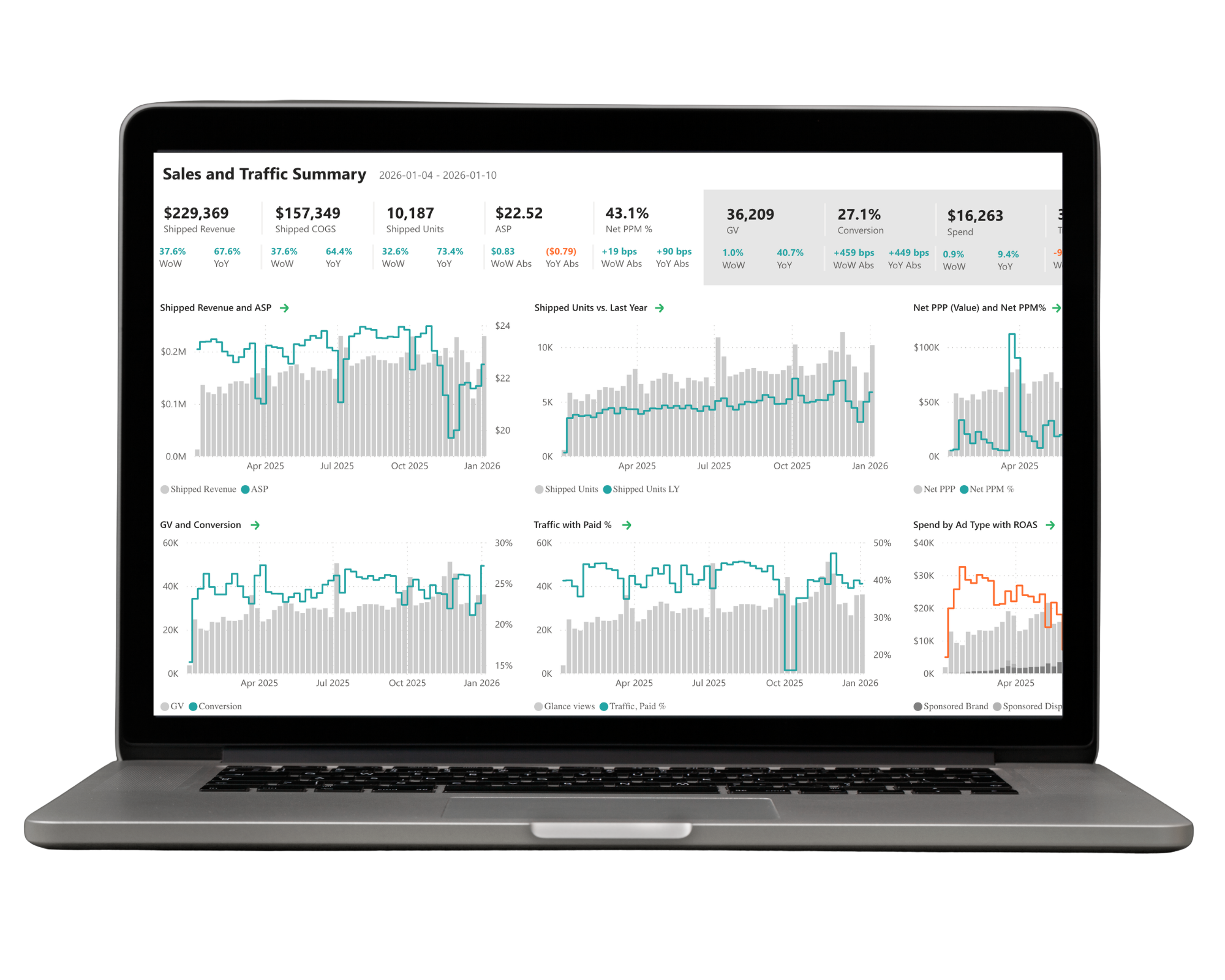
Setting Up a WBR
The WBR is an operational mechanism that helps you influence the course of your 1P business with Amazon. A WBR is not a PDF or an email. It is a meeting. The dashboard and analysis are important, but the point is live discussion, accountability, and action. Key elements for setup:
Cadence: Weekly, preferably Tuesday (after the notorious Retail Analytics data lag). It’s extremely important to establish the discipline of examining the business every week in a predictable, repeatable fashion even if there are some weeks where you don’t find anything. The practice will help the team run WBR more efficiently and in less time.
Attendees: Sales, supply chain, finance, marketing, media, with rotating product/brand stakeholders. Include senior leadership once a month, not every week.
Structure: Start with last week’s action items, review inputs (traffic, conversion, availability, ASP), identify 2-3 action items and assign owners for accountability.
Documentation: Centralize your notes and action items in a shared document. Don’t overthink it: a simple Google Doc or Slack channel can be sufficient.
Tools and Templates: Analytics with consistent visualizations and timeframe flexibility, like BASIS. Rolling log of issues/actions (used later for AVN narrative).

Crafting the Narrative for Leadership
WBR is not just about weekly tactical decisions for Amazon; it’s about securing internal support, resources, and alignment from leadership. If senior executives don’t understand the stakes or the trade-offs, you risk being underprepared or underfunded when Amazon makes demands during negotiations (or worse, off-cycle in response to major problems).
By consistently framing problems, root causes, and next steps, you are not only rehearsing for Amazon but also building credibility with your own leadership team. The goal is to ensure leaders see the Amazon business as well-managed, transparent, and worth supporting.
Resist the temptation is to turn WBR updates into a laundry list of what you did. Leaders tune out fast. Pair the data with a clear ‘so what.’ Formula for narrative:
State the trend.
Explain the root cause.
Define actions and owners.
Scaling from WBR to AVN
Scaling is about building consistency, expanding scope, and connecting the dots between tactical execution and strategic direction. A single WBR can address immediate blockers, but the real power comes from creating a rhythm of weekly, monthly, and quarterly reviews that compound into annual AVN readiness.
Scaling requires vendors to:
Maintain Consistency: Lock in a recurring cadence and structure so teams know what to expect and prepare accordingly.
Expand Depth: Move from monitoring weekly inputs (traffic, conversion, availability, ASP) to analyzing broader trends in MBRs and long-term strategies in QBRs.
Cascade Insights: Use WBR findings to feed into MBR trend validation, and escalate major risks into QBR discussions. Talk to your AVS and their manager, your advertising AE, and any other Amazon stakeholders.
Build Institutional Memory: Document outcomes across the year so AVN prep is an output of ongoing processes, not a last-minute scramble.
Create Strategic Alignment: Ensure the quarterly compass set in QBRs is visible to leadership and cascaded down into weekly execution.
When done well, scaling ensures that every WBR builds leverage for AVN. Instead of treating negotiations as a fire drill, the organization arrives prepared with a year of data, actions, and cross-functional alignment.

Why WBR with BASIS
Transform your weekly business reviews into a strategic advantage with powerful features built for finance teams and sales leaders.
Speed to Insight
Contribution to change (CTC) analysis makes it fast to understand what's driving your business—even if you're not a data expert.
- Instantly see and measure drivers
- No advanced data skills required
- Focus on what matters, faster
Root Cause Analysis
Map categories, subcategories, brands, and tags to your products for deep-dive investigations that Vendor Central can't match.
- Find narratives in minutes, not hours
- Custom metadata to your business
- Faster than Amazon's VC interface
Global View
Combine all your Vendor Central accounts and countries into one unified view with and enterprise data infrastructure.
- Unified Amazon analytics
- Currency conversion
- Identify global trends instantly
Finance First
Built for sales leaders and CFOs—not marketers. Empower your team to put points back on the P&L, not just optimize a slice of retail media spend.
- P&L focused, not campaign focused
- Built for finance and sales teams
Amazon Negotiation
Strong WBR discipline identifies and amplifies leverage points throughout the year—not just during annual negotiation prep.
- Build leverage all year long
- Enter QBRs prepared and confident
Early Identification
Time series visualizations combined with weekly discipline help you spot trends fast and early, then take action before issues become problems.
- Catch trends before they're obvious
- Act earlier for maximum impact

Try our WBR Analytics demo.
Sign up below. No phone number or sales call required.